 Health
How to Calculate BMI Correctly (Step-by-Step Guide)
If you've ever visited a doctor for a routine checkup, there's a good chance they mentioned your BMI. But what exactly is BMI, and how do you calculate it on your own? This guide breaks it all down in plain language, so you can understand what your number means and why it matters.
What Does BMI Stand For?
BMI stands for Body Mass Index. It's a simple numerical value derived from your weight and height that gives a rough estimate of body fat. The concept was developed in the 1830s by a Belgian mathematician named Adolphe Quetelet, which is why it's sometimes called the Quetelet Index.
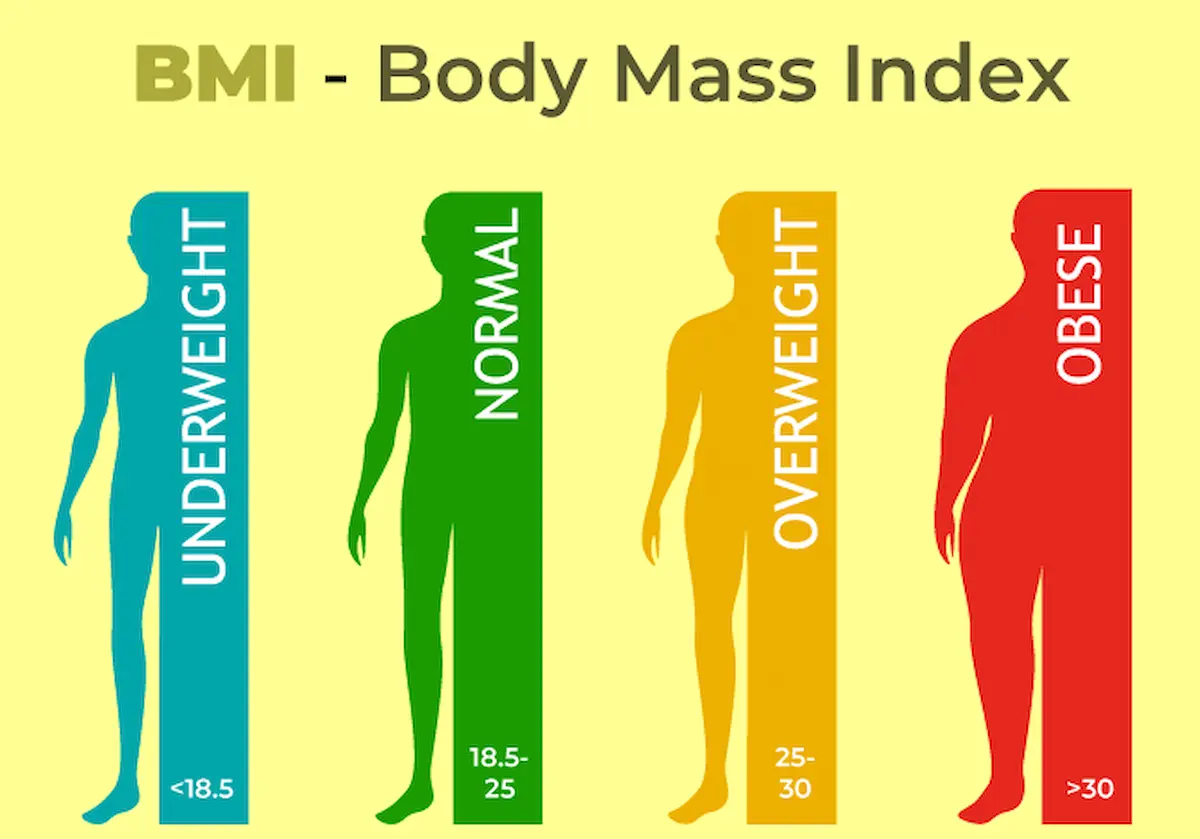
Doctors and health organizations use BMI as a screening tool — not a definitive diagnosis — to identify whether someone falls into an underweight, normal, overweight, or obese category.
The BMI Formula
Metric System
If you measure your weight in kilograms and your height in centimetres, here's the formula:
BMI = weight (kg) ÷ height (m)²
For example, suppose you weigh 70 kg and you're 175 cm tall. First, convert your height to metres: 175 cm = 1.75 m. Then square it: 1.75 × 1.75 = 3.0625. Finally, divide: 70 ÷ 3.0625 = 22.9.
Imperial System
If you're working with pounds and inches, the formula looks a bit different:
BMI = (weight in lbs × 703) ÷ height (inches)²
Say you weigh 154 lbs and stand 5'9" (69 inches). That gives you: (154 × 703) ÷ (69 × 69) = 108,262 ÷ 4,761 = 22.7.
Understanding BMI Ranges
Once you have your number, here's what it generally means according to the World Health Organization:
- Below 18.5 — Underweight
- 18.5 to 24.9 — Normal weight
- 25.0 to 29.9 — Overweight
- 30.0 and above — Obese
A "normal" BMI doesn't automatically mean you're in perfect health, and a high BMI doesn't necessarily mean you're unhealthy. Athletes with significant muscle mass, for instance, often register as "overweight" even though they're in excellent shape.
A Real-Life Scenario
Let's say Maria is 28 years old, weighs 62 kg, and is 160 cm tall. Her BMI calculation looks like this:
Height in metres: 1.60. Squared: 2.56. BMI = 62 ÷ 2.56 = 24.2.
Maria falls right in the "normal weight" category. Her doctor might still recommend regular exercise and a balanced diet, but her BMI suggests she's in a healthy range.
Common Mistakes People Make
One of the most frequent errors is forgetting to convert centimetres to metres before squaring. If Maria accidentally used 160 instead of 1.60, she'd get a wildly incorrect result. Another mistake is confusing the metric and imperial formulas — always double-check which units you're using.
Limitations Worth Knowing
BMI doesn't distinguish between muscle and fat. It also doesn't account for age, gender, or ethnicity — all of which influence what a "healthy" body composition looks like. Think of BMI as a starting point, not the full picture. If you're concerned about your health, pair your BMI with other measurements like waist circumference or body fat percentage.
Wrapping Up
Calculating your BMI is straightforward once you know the formula. Whether you use metric or imperial units, it takes less than a minute to get your number. Just remember that BMI is a screening tool — it's useful for spotting trends, but it's not the final word on your health. Use our free BMI calculator to check your result instantly.